Meet the 2024 JEDI Champions
The Stanford Postdoc Champions: Community Impact Awards serve to highlight the individual contributions of postdocs whose service fosters belonging and uplifts their communities. These awards provide a democratic way to acknowledge the work of postdoctoral scholars, and amplify the spirit of inclusion and service set by Stanford University.
Displaying 18 fellows
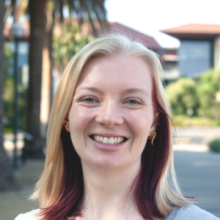
Emily A. Aery Jones
Faculty Mentor:
Lisa Giocomo
I am driven to elevate the next generation of scientists from all backgrounds. As a woman in predominantly male fields, I understand how environments are shaped by those in power to support them and exclude others. As a beneficiary of privilege, I am obligated to use those advantages to support and advocate for others. As a neuroscientist, I understand how important brain states are to cognitive function; creating spaces in which everyone thrives is critical to do great science.
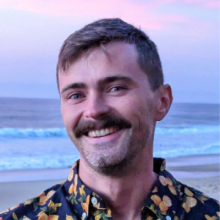
Anthony Cesnik
Faculty Mentor:
Emma Kaeller Lundberg
Fostering community for everyone in a department is very important to me. This type of growth can be challenging for postdoctoral scholars, who have diverse backgrounds, timelines, and goals. I started the Bioengineering Postdoc Chalk Talk series to build a better sense of belonging and inclusion for all postdocs in the department and to facilitate practice for a difficult part of academic job searches, the chalk talk, which may also help build equity in preparing for this career transition. I am proud that the first event in December 2023 was successful, with around 20 postdocs and one faculty member attending.
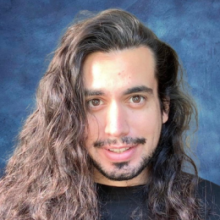
Troy Dildine
Faculty Mentor:
Sean Mackey
I am in severe pain! Why can't I get any treatment? These statements are far too frequent and a history of health disparities in pain indicates historically marginalized patients experience worse pain outcomes AND receive less pain treatment. My research career has been dedicated to better understanding the sociocultural factors underlying pain disparities and identifying ways we as a field can move towards greater pain equity and pain liberation. This challenging work cannot be done alone, and I am deeply grateful for the mentoring and support that I have received here at Stanford and previously in my training. I have been able to pursue this research and to engage in committees and programs supporting the ideals of JEDI. If you have an interest in health equity research, please reach out!

Courtney W. Hess
Faculty Mentor:
Rashmi Bhandari
I have long been motivated to improve the lives of young people managing health conditions. As I have been taught and invested in by mentors and peers, I have come to understand that advancements in science and healthcare without consideration for equity often have the unintended consequence of harming some while helping others and that this pattern systematically leaves people behind. The longer I seek answers to the challenges I wish to alleviate, the more I am left looking at the systems of inequity that must be the goal of our collective work if we want to see meaningful change.

Alam Mahmud
Faculty Mentor:
Zhenan Bao
To me, championing in JEDI space means to be bold, dynamic, and tenacious to ensure justice, equity, diversity, and inclusion. Living in many cities in Asia, in Canada and in the United States, I have experienced and identified the lack of JEDI in many different forms. Over the years, I became increasingly keen and sensitive to the challenges underrepresented populations face to date, which drives me to take active leadership roles towards building an inclusive, transparent, and more humane environment for all. My goal is to sustain a chain reaction that promotes the value and meaning of JEDI. As a scientist and educator, I look forward to leading with love, compassion, and courage to inspire young talents to demand for justice and equity and to celebrate diversity and inclusion.
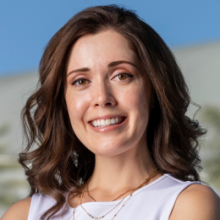
Joy A. McKenna
Faculty Mentor:
Denise Monack
I am motivated to uplift, enhance, and empower unheard voices. As a woman of color from a low-income background in science, I am thankful to my mentors, peers, family, and friends that actively included and listened to my voice. Recognizing this impact, I started the “How did we get here?" seminar series which provides a platform for postdocs to discuss the diverse path that they took to come to Stanford, facilitate workshops as a mentoring coach, and advocate for all postdoctoral scholars as a leadership member of the Stanford University Postdoctoral Association.
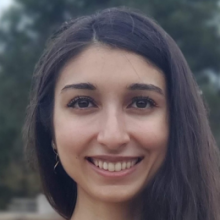
Tara Mina
Faculty Mentor:
Grace Gao
Diversifying engineering isn’t just about inclusivity; it fuels creativity and innovation. This belief led me to volunteer with, and eventually co-lead, Stanford’s Engineering Students for Diversity, Equity, and Inclusion. I'm deeply proud of our initiatives, from equipping faculty with resources to integrate JEDI topics into classrooms to organizing events like Sharing Stories that build community empathy. Our outreach to first-generation college-bound high school students, is particularly special, and seeing their determination is truly inspiring. Working alongside colleagues at Stanford who are passionate about JEDI has been absolutely remarkable and reaffirms my hope for a brighter, more diverse future in engineering.
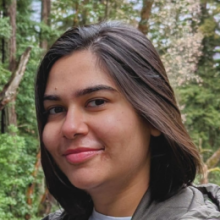
Dhriti Nagar
Faculty Mentor:
Anca Pasca
I'm fueled by the idea that small steps can lead to big changes in making the world a more just, equitable, diverse, and inclusive place. My work in the JEDI space is like planting seeds—I'm proudest when those seeds grow into moments where people feel seen, valued, and empowered. There's nothing quite like hearing that our efforts have boosted someone's confidence or made them feel more at home. I'm on a mission to ensure that underrepresented voices aren't just heard—they're amplified. And let's be real, who doesn't want a world where everyone can truly thrive?

Jennifer Ortiz Cárdenas
Faculty Mentor:
Polly Fordyce
As a first-generation Latinx student, I cherish the opportunities higher education and scientific research have provided me. Research has broadened my perspective, showing me how people from diverse backgrounds collaborate to tackle global challenges. At the Stanford Microfluidics Foundry, I’m passionate about offering underrepresented minority students their first research opportunities and the support they need to succeed. My goal is to ensure science captures crucial perspectives and that talented students don’t go unnoticed due to lack of access or connections. This way, groundbreaking discoveries won’t be missed simply because the right minds weren’t in the room where they belonged.
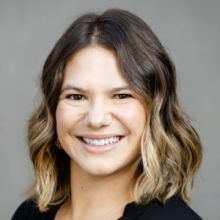
Marcela Radtke
Faculty Mentor:
Lisa Rosas
Growing up, my family fostered children with physical and intellectual disabilities, making me cognizant of the inequities that exist between the preconceived labels of “abled” and “disabled” at an early age. These same values serve as a guide for my professional endeavors, as I choose to promote and empower JEDI principles in my research, teaching, and mentorship to provide a voice for individuals who were told they would never succeed because of their race, ethnicity, socioeconomic status, or physical or mental abilities. I will continue to embody JEDI ideals throughout my career to ensure intersectional discrimination does not perpetuate health inequities nor academic opportunities in our most vulnerable populations.
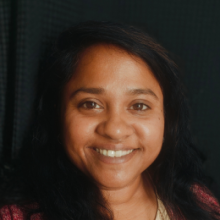
Maha Ramamurthy
Faculty Mentor:
Jason Yeatman
My passion for justice, equity, diversity, and inclusion stems from my own experiences and the recognition that everyone deserves equal opportunities to thrive. Through initiatives like Paths (https://bit.ly/paadhai) for first-generation students and ChaiTime for cultural exchange, I strive to create inclusive spaces that empower diverse voices. My public health advocacy work, especially during the pandemic, reinforced the critical importance of addressing social determinants of health and improving healthcare access for underserved communities. What drives me is the belief that small, consistent efforts can create ripples of positive change. By fostering connections, sharing knowledge, and promoting understanding, we can build a more equitable and inclusive world for all.
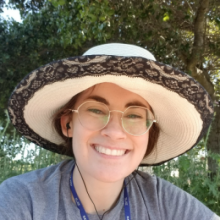
Elizabeth S. Ryland
Faculty Mentor:
Kelly Gaffney
I think DEI work is part of our purview as academic researchers. Outreach, mentoring, and supporting each other are just a few of the roles we play as part of our scientific communities. Every single one of us got to where we are today through the help of our entire community with the support and resources extended to us. We continue to benefit through conferences, collaborations, reference writers, friendly recommendations, etc. We should pay it forward. This community that we benefit from should be accessible to everyone, no matter their creed or color. I like to work towards that.
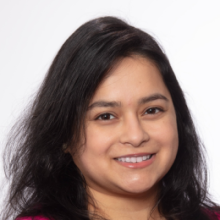
Sayane Shome
Faculty Mentor:
Nima Aghaeepour
I am driven by a passion for creating meaningful change by supporting marginalized and underrepresented communities in STEM and beyond. Over the past decade, I have championed DEI initiatives across multiple (9+) organizations, including AAAS, ISCB, and AnitaB.org. My 6 years of leadership in the ISCB Student Council opened opportunities for 2000+ students globally, advocating for youth researchers and initiating various new initiatives. As an AAAS Council member since 2024, I look forward to representing the voice of early career researchers and their challenges and advocating for policies that help address these issues. I take pride in creating spaces where everyone, regardless of background, feels valued and empowered to succeed.
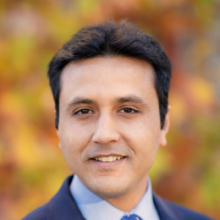
Shashi Singh
Faculty Mentor:
Heike Daldrup-Link
I am dedicated to creating an inclusive medical environment that welcomes individuals from diverse backgrounds in both patient care and research. My passion centers on advancing early diagnosis and effective treatment monitoring for children and young adults. Equally important to me is mentoring the next generation of medical professionals, inspiring them to reach new heights in medicine and research. There is immense satisfaction in shaping a brighter future, one that we can all share and enjoy, a future made possible through the health and mentorship of our youth.
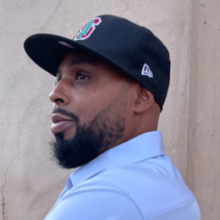
Ramon Stephens
Faculty Mentor:
Anne Charity Hudley
Equity is an understanding of self, this sense of self being defined as both myself and the world at large. At the center of this sense of self is a radical and critical form of self-love. This love extends beyonds oneself to nurture both our own and collective growth. Equity and justice also means taking on the responsibility of continually feeling unsafe, it is a radical openness that means asking hard questions and having hard questions always asked of us. According to bell hooks, this place of radical openness is a margin—a profound edge, a place that is both difficult yet necessary to achieve true self-love. Rather than simply a skillset, course, or profession, equity and justice is an eternal and sacred practice of living that has been gifted from my ancestors, family, and mentors and has sustained the livelihood of our community for generations. It is an honor to continue this practice and pass this on to generations to come.
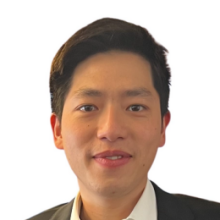
Andy Tsai
Faculty Mentor:
Anton Wyss-Coray
Throughout my journey, I have been fortunate to receive support and guidance from mentors who helped me navigate academia as a first-generation student. My commitment to equity and my passion for neuroscience, shaped by my experiences growing up in a low-income neighborhood and witnessing the resilience of my illiterate grandparents and my grandfather's struggle with neurodegeneration, drive my work. I am proud to be recognized for my efforts to advance justice, equity, diversity, and inclusion. I am committed to creating an inclusive academic environment, mentoring future scientists, and leveraging research and education to make a tangible impact on marginalized communities.
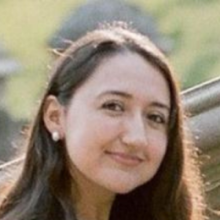
Astrid N. Zamora
Faculty Mentor:
Abby C. King
JEDI principles are not just an aspect of my work but rather a core to my identity and mission as an academic and human being. My passion lies in championing, uplifting, and empowering fellow URMs to embrace and leverage their backgrounds and identities - particularly those that have been historically marginalized within the academy - reframing them as sources of power rather than barriers. I believe these aspects not only enrich and reinvigorate the academic environment but also pave the way for greater inclusivity and diversity.
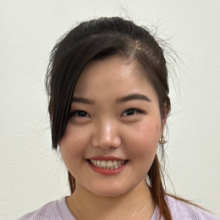
Man Zhao
Faculty Mentor:
Erinn Rankin
As the co-chair of Stanford Chinese Postdoc Association (SCPA) for 2023-2024, I leads many activities to help postdocs, visiting scholars, and Ph.D. students communicate with others and feel belongings. My work in the JEDI space is driven by a commitment to advancing justice, equity, diversity, and inclusion. I firmly believe that everyone, regardless of background, deserves the opportunity to thrive and make meaningful contributions to their community. I take pride in my efforts to challenge systemic barriers, uplift marginalized voices, and create environments where everyone feels valued and empowered. The impact of my work lies in fostering a sense of belonging and advocating for transformative change, ensuring a more equitable and inclusive future. This ongoing mission inspires and motivates me every day.