Meet the 2026 Champions
The Stanford Postdoc Champions: Community Impact Awards serve to highlight the individual contributions of postdocs whose service fosters belonging and uplifts their communities. These awards provide a democratic way to acknowledge the work of postdoctoral scholars, and amplify the spirit of inclusion and service set by Stanford University.
Displaying 15 fellows
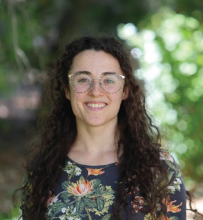
Liat Adler
Life is better with a community. Whether you're an international postdoc in a new place, a community college student looking to transfer or someone looking for fun space to keep fit finding a community makes all the difference. I’ve enjoyed contributing to different facets of life at Stanford through organising monthly postdocs socials, joining the Stanford Pole Collective and running science engagement events. The thing I’ve enjoyed the most this year was Stanford Splash where we welcomed highschoolers to Stanford so they can experience what higher education might be like, often for the first time.
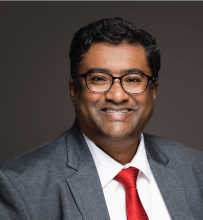
Tazbir Ahmed
Faculty Mentor:
Y. Joyce Liao
As a clinician-scientist and first-generation immigrant, I understand the isolation international researchers and their families experience when adapting to unfamiliar systems. This experience has shaped my commitment to ensuring every researcher has access to mentorship, resources, networks, and family-centered support. Through collaborations with Lane Medical Library, Stanford Research Park, SURPAS, and the National Postdoctoral Association, I have helped strengthen postdoctoral communities that promote researcher well-being and growth. I have realized that equitable professional development depends on intentional, inclusive support systems. Through my “Eye Can” initiative, I remain committed to supporting underrepresented communities globally and advocating for policies that create systemic change.
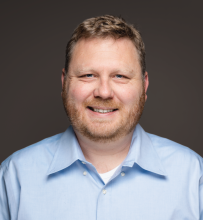
Paul Burow
Faculty Mentor:
Gabrielle Wong-Parodi
Through my research on the Pinyon Community Climate Action Network, I have worked in long-term partnership with Tribal Nations and rural communities in California’s Eastern Sierra Nevada. I am motivated by a conviction that communities facing environmental change hold critical knowledge and values that decisions about land stewardship should reflect. Mentoring Stanford students has been a key part of this effort as I supported undergraduate and graduate students across two summer field seasons working on community-engaged research that demonstrated how we can be accountable to communities. Watching them build their own relationships with our partners and learn the respect and rigorous research it requires inspires my work.
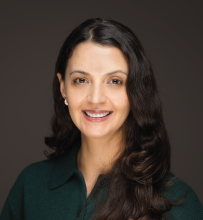
Mirian De Siqueira
Faculty Mentor:
Maria Barna
Great science depends on people as much as data. As Vice Chair of SLPA at Stanford, I've learned that growing a strong postdoc network takes the same rigor as running an experiment: you have to show up consistently, listen, and support your peers through the highs and lows of research. I bring that same approach to co-organizing the ScientistA Award, celebrating and giving back to Brazilian scientists, mentoring community college students on their first research questions, and building networks across English- and Portuguese-speaking scientists. I've seen that strong relationships make people take bolder risks and do better science!
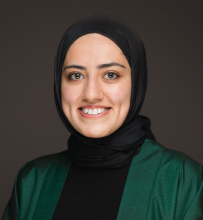
Merve Nida Gokbak
Faculty Mentor:
Rosa Bacchetta
What motivates me most is the opportunity to make someone’s life a little brighter, especially when it involves children. I have always loved bringing people together around a meaningful cause, whether through service, education, fundraising, or simply showing up for others. At Stanford, I have also experienced how powerful it is to feel welcomed and supported by a community, and that has inspired me to create that same sense of belonging for others. I am especially grateful for every opportunity to serve children and families, and I hope to carry that commitment with me throughout my career in pediatrics.
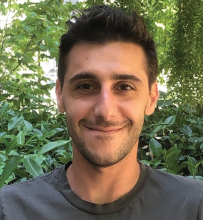
Chris Habrian
Faculty Mentor:
Brian Kobilka
We all benefit from science, medicine, and technology whether we work in STEM or not. As STEM professionals, we explore our curiosities through research, but we also have an obligation to share this world with the public. It is easy to discount our capacity or duty to this goal , but no matter your role, you can provide an access point for others outside STEM. Embracing this responsibility has also introduced me to some of the best people I have met in STEM.
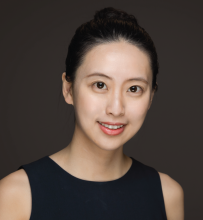
Yining Hong
Faculty Mentor:
Yejin Choi
I am deeply grateful for the guidance and support I have received from my PhD and postdoc advisors, and I hope to pass that generosity forward. As an Asian woman, scientist, and musician, I have found belonging across very different communities and hope to create it for others. I mentor more than ten students, including students from underrepresented backgrounds, give talks and share my experiences with younger students through local nonprofits, and mentor science small groups for community-school students. I also build communities by organizing research workshops and serving as CVPR Social Chair. What motivates me most is helping others feel supported, discover what excites them, and confidently pursue their own paths.

Emmy Li
Faculty Mentor:
Stanley Qi
I am driven by a desire to strengthen our community by inspiring younger generations to pursue science and scientific education. Through volunteering with Inspiring Future Scientists through Shadowing (IFSS) and co-mentoring students in the Undergraduate Visiting Research Program (UGVR), I strive to make science more accessible and welcoming to students from diverse backgrounds and stages of training. Whether introducing students to hands-on research, mentoring them in experimental design and data analysis, or sharing guidance on scientific and graduate school pathways, I hope to help others recognize their potential and envision themselves in a career in science.
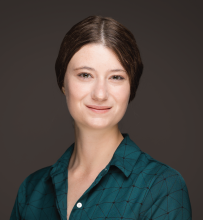
Sophie Parsons
Faculty Mentor:
Leora Dresselhaus-Marais
I am motivated by the belief that everyone who wants to be a scientist should feel welcome and encouraged to do so and we need to foster diverse communities to support that. My work with the American Physical Society has allowed me to advocate for early-career scientists, build connections across different communities within physics, and speak directly with policymakers about protecting public investment in science. I am proud of my work representing early career physicists, ensuing that postdocs and students have a voice in decisions that shape the future of our field. To me, fostering belonging means not only making people feel welcome, but also creating the structures and opportunities that allow them to participate in, contribute to, and build a future in science.
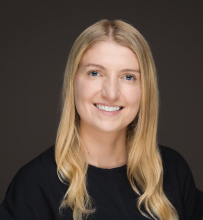
Kimberly Smith
Faculty Mentor:
Norah Simpson
I believe that meaningful connection and a sense of belonging can make a profound difference in how people navigate life's challenges. This belief guides my work with adolescents and young adults experiencing psychosis at Stanford's INSPIRE and INSPIRE360 clinics, where I strive to help young people pursue their goals without being defined or limited by a diagnosis. Whether that means continuing their education, building relationships, or finding a sense of purpose, I am passionate about helping young people envision and work toward a meaningful future. One of the most rewarding parts of my work has been co-developing and co-leading our College Wellness and Success Group, which brings together young people navigating higher education while also managing their mental health. Watching group members complete their first year of college, graduate, and continue pursuing their goals has reinforced my belief in the power of community, connection, and support.
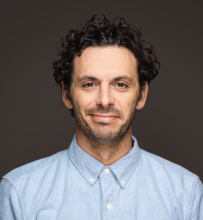
Griffin Srednick
Faculty Mentor:
Kristen Davis
Marine science has taken me across institutions, countries, field stations, and research communities, shaping my awareness of how much belonging influences who gets to participate and thrive in science. In my work, I try to build the kind of community I have valued most myself: one where students and ECRs are trusted with meaningful responsibility, encouraged to develop their own ideas and agency, and connect with people and opportunities that advance their goals. I am most proud when mentorship becomes momentum—when someone gains confidence, independence, or a clearer sense that they have a place in science.
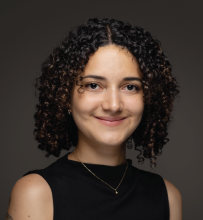
Michelle Stackmann
Faculty Mentor:
Lisa Giocomo
I believe that having a strong support network is essential to thrive in academia, and I know firsthand how important peer mentors have been to my scientific growth. As director of BELONG, I am proud to foster this same sense of community among Stanford neuroscience trainees. Together with our executive team, I organize lunches and social events that bring trainees together across career stages, labs, and interests. These spaces help trainees find peer mentors, become mentors themselves, and build their scientific networks. My goal is to make academia a place where anyone, no matter their background, feels supported and empowered to achieve their goals.
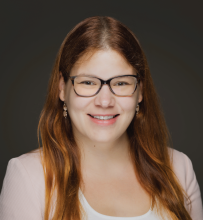
Viktoria Szeifert
Faculty Mentor:
Derick Okwan
I'm passionate about fostering diversity, connection, and peer support in science, helping researchers elevate one another instead of navigating challenges alone. Parenthood as a postdoc can feel isolating, especially without a support network around. As co-chair of the SURPAS Family Committee, I've focused on creating community where postdocs with families can connect and share knowledge to help each other thrive in both roles. I'm especially proud of running our monthly Parenting and Coffee gatherings, as well as organizing programs and events like Toy Drive-Toy Swap, Summer and Fall Festivals, and other outings that brought together over 100 postdoc family members.
Aube Tollu
Faculty Mentor:
Forrest Stuart
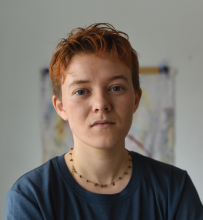
Dr. Aube Tollu's research follows people who are usually described as fundamentally "other", including jihadist militants and gang members, and looks for the ordinary forms of care, attachment, and belonging that hold their worlds together. They co-founded the Stanford Critical Artificial Intelligence Group, building with colleagues an interdisciplinary community for scholars working critically on AI. Across 2025–26 they have co-taught sociology and criminology weekly at the San Mateo County Jail through the Stanford Jail and Prison Education Program (SJPEP) which recruits new teachers across Stanford for jail and prison education every year. Both efforts come from the same commitment to critical enquiry for the purpose of bettering the lives of those most affected by inequality.
Wesley Williams
Faculty Mentor:
Craig Levin
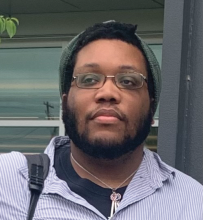
As a fellow postdoc, I’m driven by the situations unfolding for postdocs facing uncertainty in their grant-funding, immigration status, and ability to do research within “DEI-related” topics. I’ve always believed that if we are capable of being Stanford scientists and engineers, we are capable of solving for ameliorative measures from the current political zeitgeist. As long as I am able to, I hope to advocate for Postdocs who need the necessary change at the institutional level to soften the blows from the current federal administration.